

Bermuda Grass in Fescue Lawns: Why It Takes Over and How to Control It
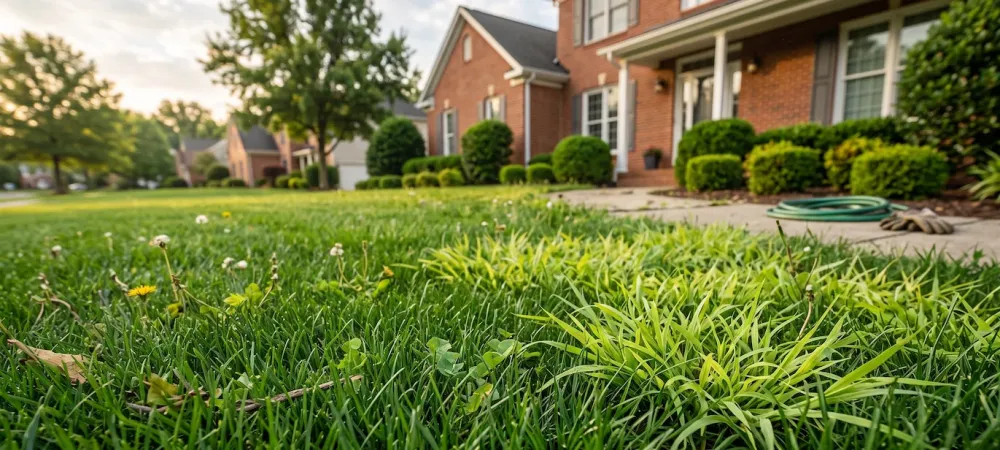
Bermuda grass creeping into a tall fescue lawn is a frustrating and common problem for Northern Virginia homeowners. It shows up as coarse, fast-spreading patches that turn brown in fall while the rest of your lawn stays green. Left alone, it keeps expanding every summer until it takes over large parts of the yard. The good news is that you can control it and protect your fescue with the right plan. This guide explains why bermuda grass invades cool-season lawns and the steps that actually keep it in check.
Quick answer
What Bermuda Grass Is and Why It Invades Fescue Lawns
Bermuda grass is a warm-season grass that grows hardest in summer heat, which is the opposite of the tall fescue most Northern Virginia lawns are built on. Fescue is a cool-season grass that thrives in the milder weeks of spring and fall. Our area sits in a transition zone, where both grass types can survive, so lawns often end up as a mix of the two. That mix is where the trouble starts.
Bermuda grass spreads aggressively through above-ground runners called stolons and underground runners called rhizomes. It also grows from seed carried in on wind, animals, and lawn equipment. Because it loves heat and full sun, it moves fastest in July and August, exactly when your fescue is stressed and thinning. Every bare or weak spot the fescue leaves behind gives bermuda grass more room to take over.
Controlling one grass inside another is genuinely hard, and bermuda grass makes it especially tough. It survives stress and regrows from roots and seed left in the soil, so it keeps returning after spot treatments. University turf research is clear on the ceiling: the best you can do is weaken bermuda grass more than you weaken the fescue around it. That reality shapes every effective plan. You are managing and reducing bermuda grass, not erasing it.
How to Control Bermuda Grass in a Fescue Lawn
Controlling bermuda grass works best as a season-long routine that weakens the invader while helping your fescue grow thick enough to crowd it out. These steps build on each other, so the more of them you follow, the better your results.
- Confirm it is bermuda grass first. Bermuda grass has fine, flat blades, spreads in circular patches, and turns tan and dormant after the first hard frost while your fescue stays green. Correct identification matters, because the treatment that works on bermuda grass will not match what you would use for crabgrass or nutsedge.
- Mow your fescue high. Keeping fescue at 3.5 to 4 inches shades the soil and slows the low-growing bermuda grass, which needs sunlight at ground level to spread. Taller grass also blocks light that weed seeds need to germinate. Mowing high is a simple change that makes a real difference.
- Water deeply and less often. Deep, infrequent watering pushes fescue roots down and helps it stay strong through summer. Light, daily watering favors shallow-rooted invaders like bermuda grass. Aim to water in the early morning so the lawn dries during the day.
- Apply selective treatments during active bermuda growth. Selective products can weaken bermuda grass more than the surrounding fescue, but timing is everything. Treatments work when bermuda grass is green and growing, in late spring and again in early fall, and should be avoided during peak summer heat. Fescue may show some short-term stress after treatment and usually recovers within about two weeks. Suppression takes repeated treatments across the season, and often across more than one year.
- Overseed your fescue in fall. After treatment thins the bermuda grass, fall is the best window to rebuild your lawn. Aeration and overseeding, sometimes called power seeding, fill the open spots with fresh cool-season grass so bermuda grass has less room to return.
Your Options for Dealing With Bermuda Grass
Homeowners usually have three realistic paths, and the right one depends on how far the bermuda grass has spread and how much disruption you can accept.
The first option is a suppression program, which uses selective treatments plus good mowing, watering, and overseeding to reduce bermuda grass over time. This is the best fit for most lawns where fescue is still the majority grass and you want to save it. It is steady and lower-risk, but it asks for patience across multiple seasons.
The second option is a full renovation, where the entire area is killed off with a non-selective product and then reseeded or sodded with clean fescue. Renovation makes sense when bermuda grass has taken over most of the lawn and selective treatment would take too long to catch up. The tradeoff is cost, effort, and a lawn that looks rough during the transition.
The third option is to accept a mixed lawn, which some homeowners choose when the invasion is light and the look does not bother them. This is the lowest-effort path, but bermuda grass rarely stays contained. Without active control, it usually keeps gaining ground each summer and leaves brown patches every winter.
How to Keep Bermuda Grass From Coming Back
Prevention is about keeping your fescue thick and healthy so bermuda grass never finds an opening. A few habits go a long way:
- Overseed thin areas every fall to keep the lawn dense.
- Mow high all season so fescue shades out low invaders.
- Water deeply and in the morning rather than lightly every day.
- Clean grass clippings off mowers and tools before moving between yards.
- Soil test every few years and fertilize your fescue on schedule to keep it strong.
- Address new bermuda grass patches early, while they are small and easier to manage.
When to Call a Lawn Care Professional
Some bermuda grass problems are bigger than a mowing and watering routine can fix. If the invasion covers a large part of your yard, keeps returning after your own efforts, or you are not comfortable choosing and timing treatments, it is worth bringing in a professional. Selective treatments in particular need correct timing and application to protect your fescue, and many are best handled by a licensed applicator.
A professional can also confirm what you are dealing with and build a plan around your specific lawn. Our Bermuda Grass Suppression Program reduces bermuda grass with a proven, tailored plan, and pairs treatment with aeration and seeding to rebuild a thick, healthy fescue stand. Ongoing care through a full lawn care program keeps that lawn strong enough to hold bermuda grass back for the long run.
The Bottom Line
Bermuda grass in a fescue lawn is a manageable problem, not a lost cause. Mowing high, watering deeply, timing selective treatments to active growth, and overseeding in fall will steadily push your lawn back toward the fescue you want. It takes consistency and usually more than one season, but the payoff is a dense, healthy lawn that resists invasion on its own.
If bermuda grass is spreading through your yard, the sooner you act, the more fescue you can save. Call NuLeaf Lawn Care to schedule a lawn evaluation, and we will assess how far the bermuda grass has spread and recommend the right plan for your yard.
Sources
- Virginia Cooperative Extension. "Selective Bermudagrass Control for Lawns." Virginia Tech, publication SPES-350, https://www.pubs.ext.vt.edu/SPES/SPES-350/SPES-350.html.
- NC State Extension. "Tall Fescue." TurfFiles, North Carolina State University, https://www.turffiles.ncsu.edu/grasses/tall-fescue/.
- N.C. Cooperative Extension, Henderson County Center. "Weed Control in Fescue Lawns." North Carolina State University, https://henderson.ces.ncsu.edu/news/weed-control-in-fescue-lawns/.