

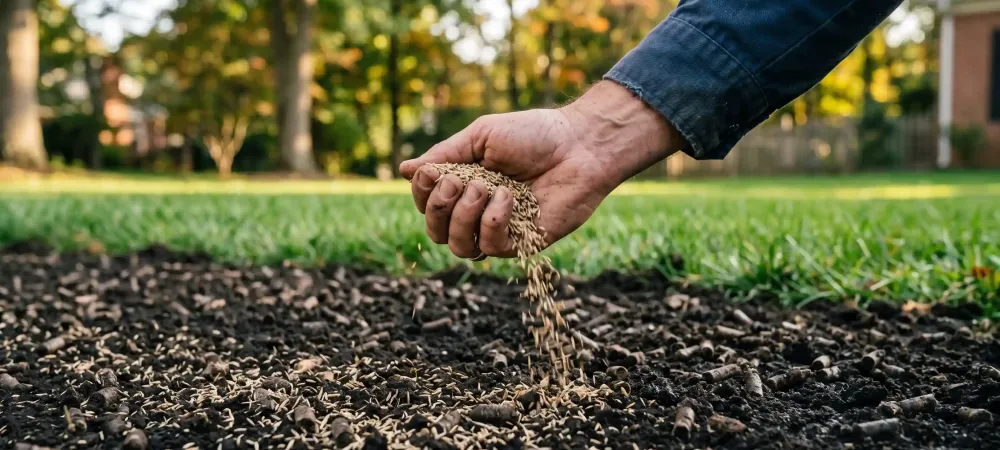
Best Tall Fescue Seed for Northern Virginia Lawns
Not all grass seed is created equal—especially in Northern Virginia.
Our region sits in the transition zone, where cool-season lawns must endure hot, humid summers, periods of drought, heavy rainfall, disease pressure and cold winters. Tall fescue is an excellent choice for these conditions, but the quality of the seed and the cultivars in the blend can make a major difference in how well a lawn establishes, performs and recovers.
At Nuleaf Lawn Care, we believe a healthier lawn starts with better seed. That is why we use only high-quality, Blue Tag Certified tall fescue seed selected specifically for the challenges lawns face in Northern Virginia.
What Is Blue Tag Certified Grass Seed?
A blue certification tag identifies seed that has met established standards for varietal purity, identity and quality. It gives property owners greater confidence that the seed in the bag is the seed listed on the label.
The seed used by Nuleaf is selected for:
- High germination rates
- Exceptional purity
- Free from weed seed
- Consistent, dependable performance
- Cultivars suited to our regional growing conditions here in Northern Virginia
Cheaper seed may appear to save money initially, but it can contain lower-performing varieties, unwanted crop seed or weed seed. It may also have a lower germination rate. Those shortcomings can result in thin turf, inconsistent color, more weeds and the need for additional seeding later.
Quality seed gives a lawn a better foundation from the beginning.
Regional Testing and Recommended Cultivars Matter
A tall fescue variety that performs well in one part of the country may not be the best choice for Northern Virginia. Seed selection should be based on independent research and performance under conditions similar to ours.
At Nuleaf Lawn Care, we select cultivars that appear on the recommended tall fescue lists for Virginia and Maryland, as well as cultivars that are among the highest-rated performers in National Turfgrass Evaluation Program (NTEP) trials. These independent university and national trials evaluate important characteristics such as overall turf quality, color, density, disease resistance, drought and heat tolerance, and overall performance.
By combining regional university recommendations with NTEP performance data, we can select proven, high-performing cultivars that are well suited to the demanding growing conditions of Northern Virginia rather than relying on attractive packaging, marketing claims or price alone.
As university recommendations and NTEP results evolve, we continually evaluate our seed blend so we can take advantage of newer and improved tall fescue genetics.
Improved Resistance to Gray Leaf Spot
Northern Virginia's heat and humidity can create favorable conditions for turfgrass diseases. Gray leaf spot can be especially damaging to newly established tall fescue and may thin young turf quickly when conditions are right.
For that reason, disease resistance is an important part of our seed-selection process. We use cultivars chosen for improved resistance to gray leaf spot, helping young lawns withstand disease pressure during the critical establishment period.
No grass variety is completely immune to disease, and proper watering, mowing and fertilization still matter. However, starting with cultivars that have better genetic resistance gives the lawn an important advantage.
The Benefit of Lateral-Spreading Tall Fescue
Traditional tall fescue grows primarily in individual bunches. When an area becomes thin or damaged, it may not fill in as readily as a spreading turfgrass.
Newer lateral-spreading tall fescue cultivars are bred to produce short rhizomes or spreading tillers. This can improve turf density and help the lawn recover from minor wear and thinning. These cultivars still require proper care and periodic overseeding, but their growth characteristics can help create a thicker, more uniform lawn over time.
Cultivars We May Include
Depending on availability and the needs of our seed blend, cultivars may include:
- Fayette
- BladeRunner 3
- Crossfire 4
- Triad
We use a blend rather than relying on a single cultivar because genetic diversity helps a lawn perform more consistently under varying conditions. One cultivar may excel in disease resistance, while another may contribute better density, color or recovery. Combining carefully selected cultivars creates a more resilient stand of turf.
Because university testing and seed availability can change, Nuleaf continually evaluates its blend and selects high-performing cultivars from current regional recommendations and NTEP trial results.
Great Seed Still Requires Proper Establishment
Even the best seed needs the right conditions to succeed. Seed-to-soil contact, consistent moisture and proper mowing are essential during establishment. Core aeration and seeding help create openings in the soil where seed can settle, germinate and develop stronger roots.
After seeding, the soil surface should remain consistently moist without becoming saturated. Once the new grass is established, watering should gradually become deeper and less frequent. Proper mowing height and balanced fertilization will also help young tall fescue mature into a healthier lawn.
Invest in the Foundation of Your Lawn
The seed installed today influences how a lawn looks and performs for years to come. Selecting high-quality, regionally tested cultivars can improve germination, turf density, color, disease resistance, and long-term resilience.
At Nuleaf Lawn Care, we do not choose seed based on price alone. We use clean, high-germination, Blue Tag Certified seed and carefully selected tall fescue cultivars suited to Northern Virginia. It is one of the most important ways we help our customers build thicker, healthier, and more attractive lawns.
If your lawn is thin, stressed, or struggling to recover from summer conditions, Nuleaf's core aeration and seeding service can help give it a stronger start. Contact Nuleaf Lawn Care to learn more or request an estimate.