

Signs of Grub Damage in Your Yard
Brown patches in a lawn are easy to blame on heat or watering issues. But when grass fails to recover even after rainfall or irrigation, the problem is often happening below the surface. Lawn grubs are one of the most damaging turf pests because they feed directly on grass roots, cutting off the lawn’s ability to absorb water and nutrients.
By the time visible damage appears, root loss is often already well underway. That’s what makes grub damage so frustrating—and so commonly misdiagnosed.
What Are Grubs?
Lawn grubs are the larval stage of beetles and live just beneath the soil surface. Instead of chewing grass blades, they feed on the root system, which anchors turf and keeps it healthy.
When roots are eaten away, grass can no longer support itself, leading to thinning, yellowing, and eventual die-off. Because the damage happens underground, many homeowners don’t realize grubs are present until large sections of the lawn begin to fail.
What Do Grubs Look Like?
Lawn grubs are easy to identify once you know what to look for:
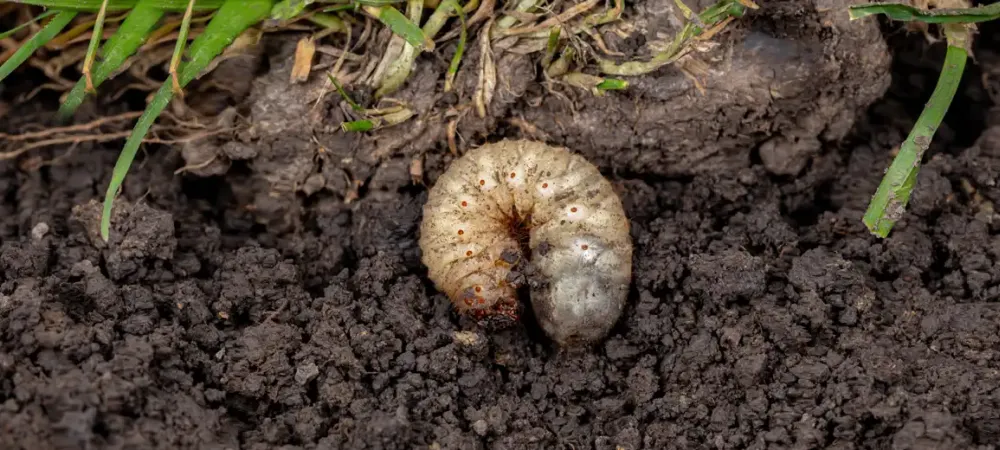
- White to off-white bodies with a distinct C-shaped curl.
- Soft, segmented bodies with a brown or tan head.
- Typically ½ to 1 inch long, depending on their growth stage.
- Found just below the soil surface, especially under thinning or loose turf.
- Curl into a C-shape when disturbed, which helps distinguish them from earthworms or other beneficial insects.
Seeing one grub doesn’t always indicate a serious issue, but finding multiple grubs in a small area usually signals an active infestation that can cause root damage quickly.
Signs You May Have Grubs
Grub damage often looks similar to other lawn problems, which is why it’s frequently overlooked. Common indicators include:
- Brown or thinning patches that do not improve with watering.
- Grass that pulls up easily, almost like rolling back carpet.
- Irregular patches that spread outward over time.
- Increased bird or wildlife activity, especially digging in the lawn.
Wildlife activity is an especially strong clue. Animals often detect grubs before turf damage becomes obvious, and digging usually means the problem has been active for a while.
Grub Damage vs Other Lawn Problems
Grubs are often mistaken for drought stress or lawn disease, but the difference is how the lawn responds.
- Drought-stressed grass typically rebounds once watering improves.
- Disease-related damage often shows spotting, discoloration, or defined patterns.
- Grub damage continues to worsen because the root system has already been compromised.
If grass feels loose underfoot or lifts easily from the soil, root damage—not surface stress—is usually the cause.
When Grubs Are Most Active
Grub activity follows a seasonal pattern, and timing is critical for effective control.
Grubs hatch and begin feeding during warmer months, gradually increasing root damage as they grow. By the time widespread browning appears, grubs are often nearing the end of their feeding cycle, which limits how effective late treatments can be.
This is why some treatments focus on prevention, while others attempt to control active infestations. Applying the wrong product at the wrong time is one of the most common reasons grub treatments fail.
Can You Treat Grubs Yourself?
DIY grub treatments can work in certain situations, but success depends heavily on timing and proper application. Many homeowners apply products only after visible damage appears, when root loss has already occurred.
Other common challenges include:
- Treatments not reaching the root zone.
- Using preventative products after grubs are already mature.
- Treating without confirming that grubs are actually present.
Without accurate identification and correct timing, even well-intentioned applications may provide little improvement.
How Professional Grub Control Helps
Professional grub control starts with confirmation rather than assumptions. An inspection determines whether grubs are present, how active they are, and whether treatment is still effective for the season.
A professional approach typically focuses on:
- Verifying the cause of turf damage.
- Selecting the correct product based on timing.
- Applying treatments at the proper depth.
- Planning ahead to reduce future grub activity.
Early detection and correct timing are what give lawns the best chance to recover without extensive reseeding or renovation.
Why Acting Early Matters
Grubs don’t just damage grass—they weaken the entire lawn system. As roots disappear, lawns become more vulnerable to weeds, heat stress, and erosion.
Addressing grub activity early helps protect healthy turf and limits long-term damage. If a lawn shows signs of decline that don’t match typical watering or disease patterns, checking for grubs sooner rather than later can prevent more serious issues down the line. If you're noticing any signs of lawn stress, reach out to our team today for an inspection and a custom lawn care program to address your needs.